
Call us: 08032016779
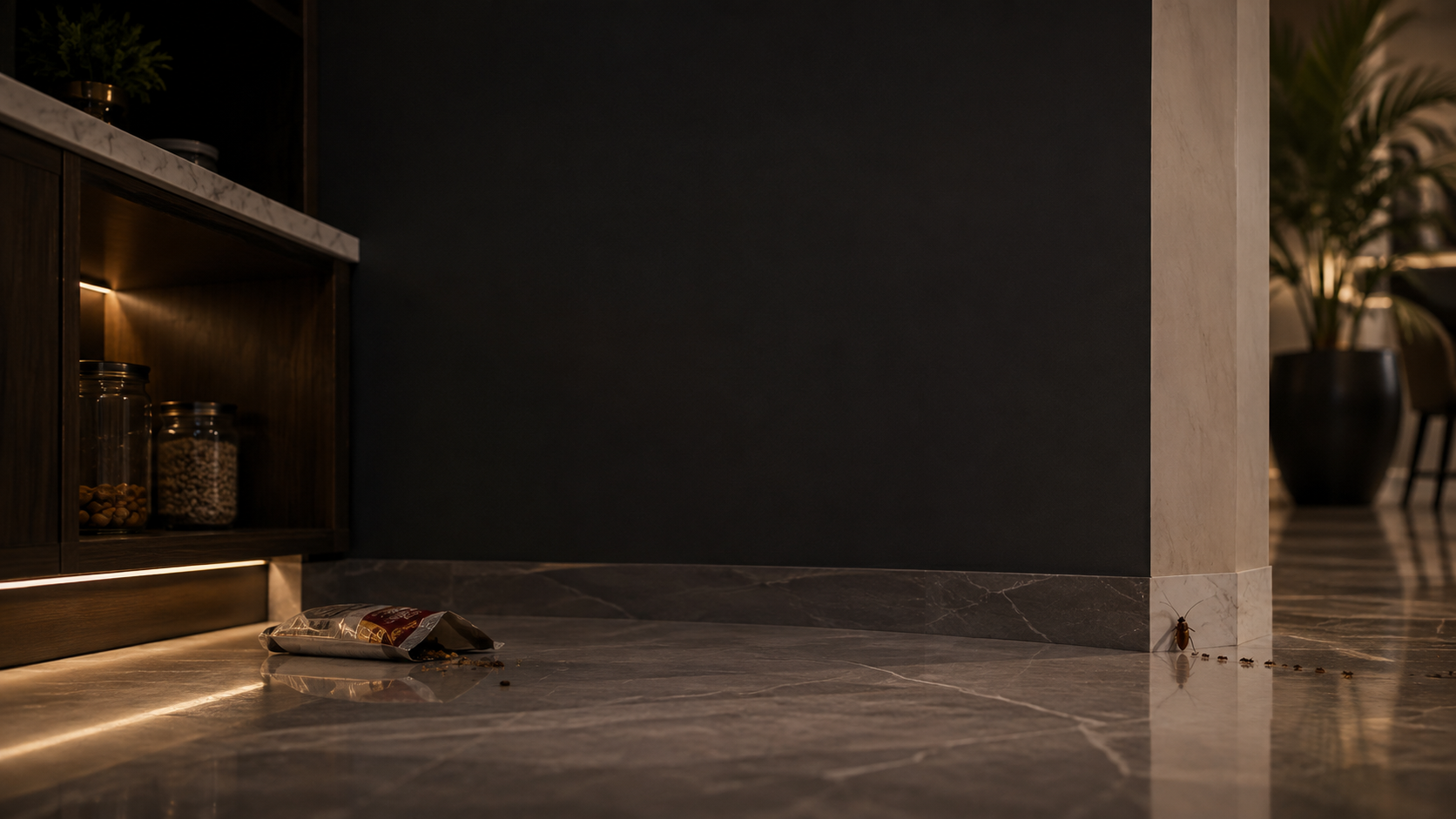

Pests are not always easy to spot. By the time you see insects or rodents moving around openly, they may already have established themselves somewhere in the property.
In Lagos homes, warm weather, food sources, moisture, drainage systems, gardens and building access points can all create opportunities for pests.
The earlier you notice the warning signs, the easier it is to have the problem properly assessed.
Here are seven signs that may indicate pest activity in your home.
1. You are seeing pests during the day
An occasional insect entering from outside does not automatically mean you have an infestation.
However, regularly seeing cockroaches, rodents, ants or other pests inside the home deserves attention.
Pay particular attention to repeated sightings around:
- Kitchens
- Food-storage areas
- Bathrooms
- Drains
- Cupboards
- Waste areas
- Behind appliances
If sightings are becoming more frequent, there may be an established source nearby.
2. You notice droppings or unusual marks
Rodents and some insects can leave evidence even when you do not see the pests themselves.
Look for small droppings in hidden areas such as:
- Behind refrigerators
- Inside cupboards
- Under sinks
- Storerooms
- Along walls
- Near food storage
- Behind furniture
You may also notice unusual smear marks along frequently travelled routes.
Avoid handling unknown droppings unnecessarily. If you are unsure what you are seeing, a pest-control professional can inspect the area and help identify the likely source.
3. There are unexplained noises at night
Scratching, movement or rustling inside ceilings, walls or roof spaces can sometimes indicate rodent activity.
These sounds may be easier to notice late at night when the house is quiet.
The location and timing of the noise can help during an inspection, so make a note of where you hear it.
Do not assume every sound is caused by pests, but repeated noises from the same area are worth investigating.
4. Food packaging is being damaged
Rodents and some insects are attracted to accessible food.
Possible warning signs include:
- Holes in food packaging
- Gnaw marks
- Spilled grains or dry food
- Contamination inside cupboards
- Unexplained damage to stored food
Check items such as rice, flour, cereal, pet food and other dry goods.
Food should be stored securely, and damaged or contaminated packages should not be ignored.
If the problem continues after cleaning and securing food storage, there may be a wider pest issue within the property.
5. You find insect wings, shed skins or egg cases
Pests can leave physical evidence behind.
Depending on the pest, you may find:
- Discarded wings
- Shed insect skins
- Egg cases
- Dead insects in corners
- Small piles of debris
- Evidence near cracks or concealed areas
These signs can sometimes reveal activity even if the pests themselves remain hidden.
For example, discarded wings around windows or doors may warrant further investigation when combined with other signs of termite activity.
Correct identification matters because different pests require different treatment approaches.
6. Wood or furniture appears unexpectedly damaged
Some pests can damage wood, furniture, fittings or other materials.
Possible warning signs include:
- Wood that sounds hollow
- Fine debris near wooden structures
- Damaged door frames
- Unexplained holes
- Weakened timber
- Changes around skirting boards or cabinets
Not every type of wood damage is caused by termites, so identification should come before treatment.
A professional inspection can help determine whether the damage is pest-related and what areas of the property may need closer examination.
7. There are persistent odours or unexplained pest activity around one area
Sometimes the warning sign is not what you see but what you smell.
Persistent unusual odours around cupboards, ceilings, hidden spaces or waste areas can sometimes accompany pest activity.
You may also notice that insects repeatedly appear around one particular drain, cabinet, wall opening or section of the property.
That pattern can provide a useful clue about where pests are entering or harbouring.
Why pests keep returning
Treating only the pests you can see may not address the conditions allowing them to return.
Re-infestation can be encouraged by:
- Open food sources
- Poorly sealed waste
- Cracks and entry points
- Standing water
- Drainage issues
- Cluttered storage
- Hidden harbourage areas
- Gaps around doors, windows or pipes
A good pest-control approach should therefore consider both the active pest problem and the conditions supporting it.
Should you spray immediately when you see a pest?
Not necessarily.
Before treatment, it helps to understand what pest is present, where the activity is occurring and how extensive the problem may be.
Using the wrong product or treatment method can fail to solve the underlying problem and may create unnecessary exposure risks.
For a persistent or uncertain pest issue, inspection should come before deciding on the appropriate treatment.
What information should you give a pest-control technician?
The more information you can provide, the easier it is to assess the situation.
Tell the technician:
- What you have seen
- Where you saw it
- How often it occurs
- When the activity is most noticeable
- Whether there are children or pets in the property
- Whether any pest treatment has already been attempted
- Whether neighbouring areas have similar problems
If possible, photographs of the pest or signs of activity may also help with identification.
How to reduce the risk of pests returning
Good housekeeping can reduce some of the conditions pests depend on.
Useful steps include:
- Store food securely.
- Clean spills and crumbs promptly.
- Keep waste properly covered.
- Repair obvious entry points where practical.
- Address standing water and moisture problems.
- Reduce unnecessary clutter in storage areas.
- Follow any preparation and post-treatment instructions given by your technician.
These measures can support professional pest-control work but may not replace treatment where an established infestation already exists.
When should you call a professional?
Consider a professional inspection when:
- Pest sightings are becoming frequent
- You find repeated droppings or other evidence
- Rodent activity is suspected inside walls or ceilings
- Termite activity may be present
- A problem keeps returning after cleaning
- Several areas of the property are affected
- You are unsure what pest you are dealing with
Correct identification is important because the most appropriate approach depends on the pest, property and extent of activity.
Professional pest control in Lagos
Alpha Pest Control provides inspection-led pest-control and fumigation services for homes, offices and other properties in Lagos.
The process begins by understanding the pest problem and the property before determining the appropriate treatment approach.
Request a free inspection or call Alpha on 08032016779 to discuss your pest-control needs.