
Call us: 08032016779
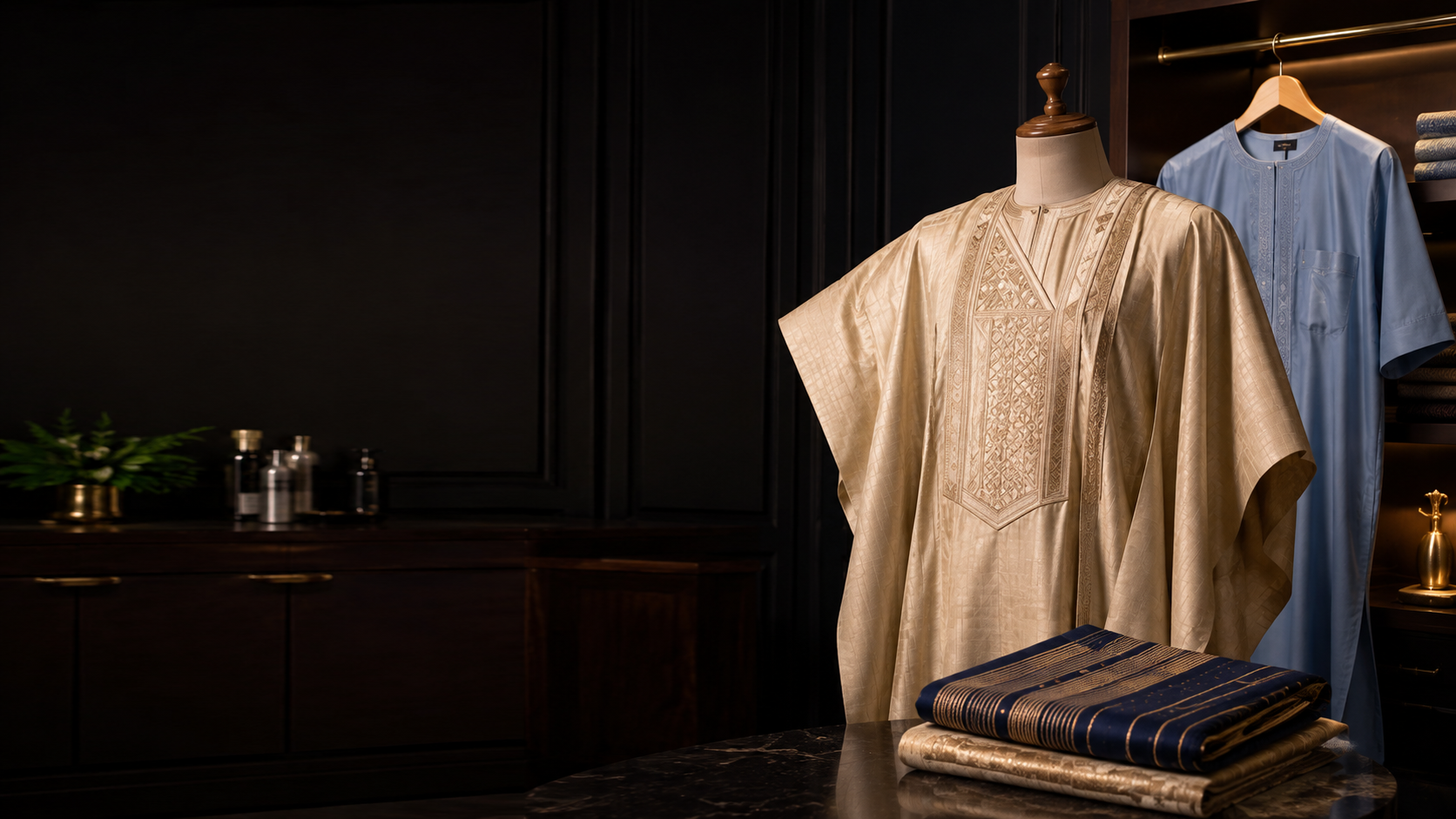

Nigerian native wear can combine expensive fabric, embroidery, structured construction, beads, decorative stitching and carefully finished details. That means caring for an Agbada, Kaftan or Aso Oke outfit is not always as simple as putting it into a washing machine.
The correct cleaning method depends on the fabric, colour, embellishments, construction and finishing of the individual garment.
Why native wear needs special care
Many traditional garments combine more than one material or finishing technique.
An Agbada, for example, may include heavy embroidery across the chest and neckline. Aso Oke may have a woven structure that reacts differently to water and agitation than ordinary cotton. Lace, George, Ankara and heavily embellished fabrics can each require different handling.
Using one cleaning method for every native outfit can therefore create problems such as:
- Colour bleeding
- Shrinkage
- Loss of shape
- Damaged embroidery
- Loosened beads or embellishments
- Fabric distortion
- Loss of the desired crisp finish
That is why professional assessment should come before cleaning.
Check the garment before cleaning
Before cleaning native wear, inspect the entire garment.
Look particularly at:
Stains: Identify food, makeup, oil, perspiration or drink stains where possible.
Colour: Check whether different coloured fabrics or embroidery have been combined.
Embroidery and beads: Look for loose threads, stones or decorative elements.
Fabric condition: Older or delicate fabric may require gentler treatment.
Construction: Structured collars, cuffs and heavily embroidered panels may need additional care.
If you know what caused a stain, tell your cleaner. That information can help determine an appropriate treatment.
Avoid aggressive home stain treatments
One of the easiest ways to damage an expensive native outfit is to apply a strong household chemical without understanding the fabric.
Bleach, concentrated detergent and aggressive stain removers can affect colour and texture.
Rubbing a stain vigorously can also spread it or damage the surface of the material.
A safer approach is to blot fresh liquid gently where appropriate and have difficult stains professionally assessed as soon as practical.
Be especially careful with Aso Oke
Aso Oke has a distinctive woven structure and can be used for Agbada, Iro and Buba, caps and special-occasion garments.
Because construction, dyes and embellishments differ from one outfit to another, there is no universal cleaning rule for every Aso Oke garment.
Before cleaning, the fabric and decorative elements should be assessed to determine an appropriate method.
Proper finishing matters too
Cleaning is only part of the result.
Native wear often depends heavily on presentation. Collars, sleeves, pleats and embroidered areas should sit properly when the garment is worn.
Professional pressing and finishing can help restore structure and produce a polished appearance without unnecessarily flattening decorative details.
If you have a particular starch preference, communicate it before cleaning rather than assuming every customer wants the same level of stiffness.
How to store native wear after cleaning
Once the garment is clean:
- Make sure it is completely dry before storage.
- Use a suitable hanger for structured garments.
- Avoid forcing heavy garments into an overcrowded wardrobe.
- Keep delicate embellishments away from items that can snag them.
- Store special-occasion clothing in a clean, dry environment.
- Avoid leaving garments in plastic packaging indefinitely if moisture may be trapped inside.
For heavily beaded or unusually heavy garments, folding may sometimes be more appropriate than hanging, depending on the construction.
Should native wear be cleaned after every use?
Not necessarily.
How soon an outfit needs cleaning depends on what happened while it was being worn.
A Kaftan worn for two hours in an air-conditioned environment may be very different from an Agbada worn throughout a hot outdoor wedding in Lagos.
Consider professional cleaning when there is:
- Perspiration buildup
- Odour
- Visible staining
- Makeup around collars
- Food or drink marks
- Dust or dirt
- A need to restore the finish before storage
The condition of the garment should guide the decision.
Professional native-wear cleaning in Lagos
Alpha Dry Cleaners cares for Agbada, Kaftan, Aso Oke, Ankara, lace, Iro & Buba, George, native caps and other special garments.
Because each piece can be different, the appropriate cleaning and finishing method should be based on the garment itself.
Schedule a pickup or call Alpha on 08032016779 for professional garment care in Lagos.